Full-body impact of low or missing PTH
Select parts of the body to learn more about the wide-reaching impact of low or missing PTH.


 Not an actual patient.
Role of PTH
Symptoms like nerve tingling, muscle weakness, brain fog, or fatigue are all connected to low or missing PARAthyroid hormone (PTH).
Hormones and minerals work together to keep your body working properly.
PTH is an essential hormone that controls the balance of 2 important minerals: calcium and phosphate.
Low or missing PTH disrupts the balance of calcium and phosphate so the body can’t perform certain functions (especially in the bones, kidneys, and intestines).
Chronic HypoPARAthyroidism (HypoPARA) may lead to many symptoms and serious health risks due to the lack of PTH and the low calcium caused by it.
* From a study looking back at health data from people in Sweden living with HypoPARA. During follow-up, 8.7% (136/1562) with HypoPARA developed chronic kidney disease compared with 2% (309/15,620) in control groups. All patients were taking calcitriol, and some were also taking calcium supplements.
† Based on a 5-year analysis of medical insurance claims (N=48,582). Heart-related events included 1 or more of the following: cerebrovascular disease, coronary artery disease, heart failure, and peripheral vascular disease.
Select parts of the body to learn more about the wide-reaching impact of low or missing PTH.
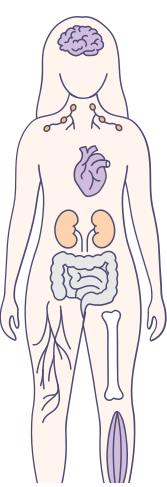
Brain fog, fatigue, anxiety, irritability, and depression
PTH receptors are present in the brain, so low or missing PTH can impair cognitive function and structurally change your brain.
Nerve tingling, numbness, pain, tetany, and seizures
When calcium levels drop from low or missing PTH, your nervous system can become overly sensitive and hyperactive, causing symptoms like tingling. This nerve excitability can lead to tetany, which involves painful muscle spasms and cramps.
Bone breaks and bone pain
PTH balances the normal bone-turnover process, which includes building and breaking down bones. When PTH is low or missing, it leads to overly dense bone that may be more likely to break in some areas of the body.
Kidney stones and kidney disease
Low or missing PTH prevents your kidneys from removing phosphate from the body and keeping calcium in the body. This imbalance, along with taking calcium and active vitamin D, can lead to serious issues like chronic kidney disease.
Risk of declining kidney function in chronic HypoPARA increases over time.
Calcium deposits in the brain, kidneys, eyes (cataracts), heart, and blood vessels
When PTH is missing, blood calcium drops but phosphate spikes. Taking calcium and active vitamin D can also cause calcium levels to spike. When calcium and phosphate go out of balance, hard calcium-phosphate crystals (calcifications) can form in places like the kidneys, eyes, or blood vessels.
Difficulty absorbing calcium
Without PTH, your kidneys are not able to make the active vitamin D that the intestines need to absorb calcium from your diet and oral supplements.
Abnormal heartbeat, heart calcifications, and heart disease
The lack of PTH results in low calcium that can cause the heart to beat abnormally (also known as arrhythmia). Lack of PTH, as well as taking calcium and active vitamin D, can cause calcifications in the heart itself and lead to heart disease.
Weakness, cramps, pain, stiffness, and spasms
Low or missing PTH causes low blood calcium, which can lead to cramps, stiffness, and other symptoms. If spasms occur in the muscles connected to breathing, they can be severe and life-threatening.
Increased risk of infection, such as upper respiratory infection and urinary tract infection, sometimes requiring emergency care
A shortage of PTH can compromise the immune system, which makes it harder for your body to naturally fight off infections.
